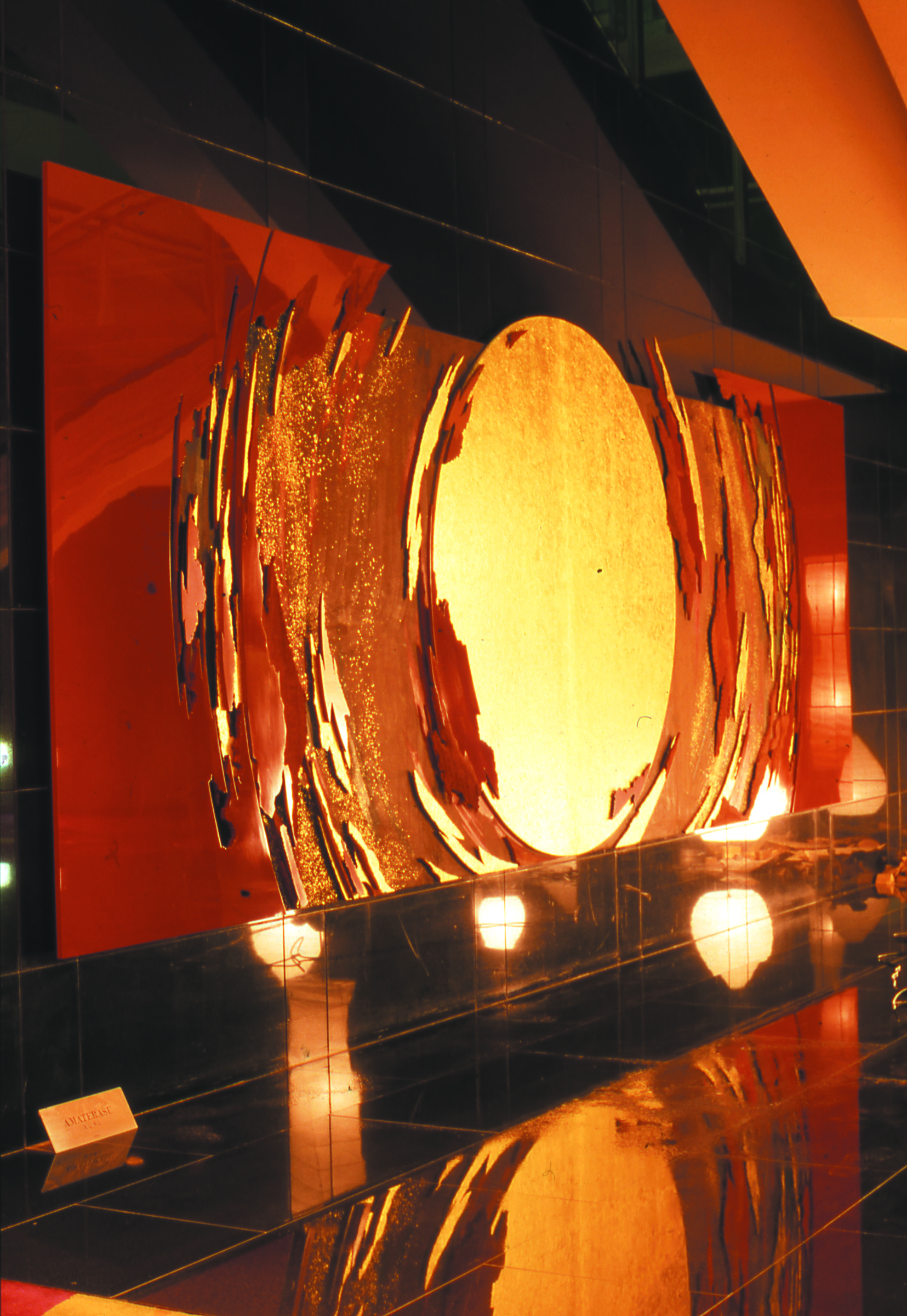
Title: "AMATERASU" ― A Prayer for Peace and Resonance with Isamu Noguchi
This work embodies my consistent theme of "Opposition to War" – a profound message for peace.
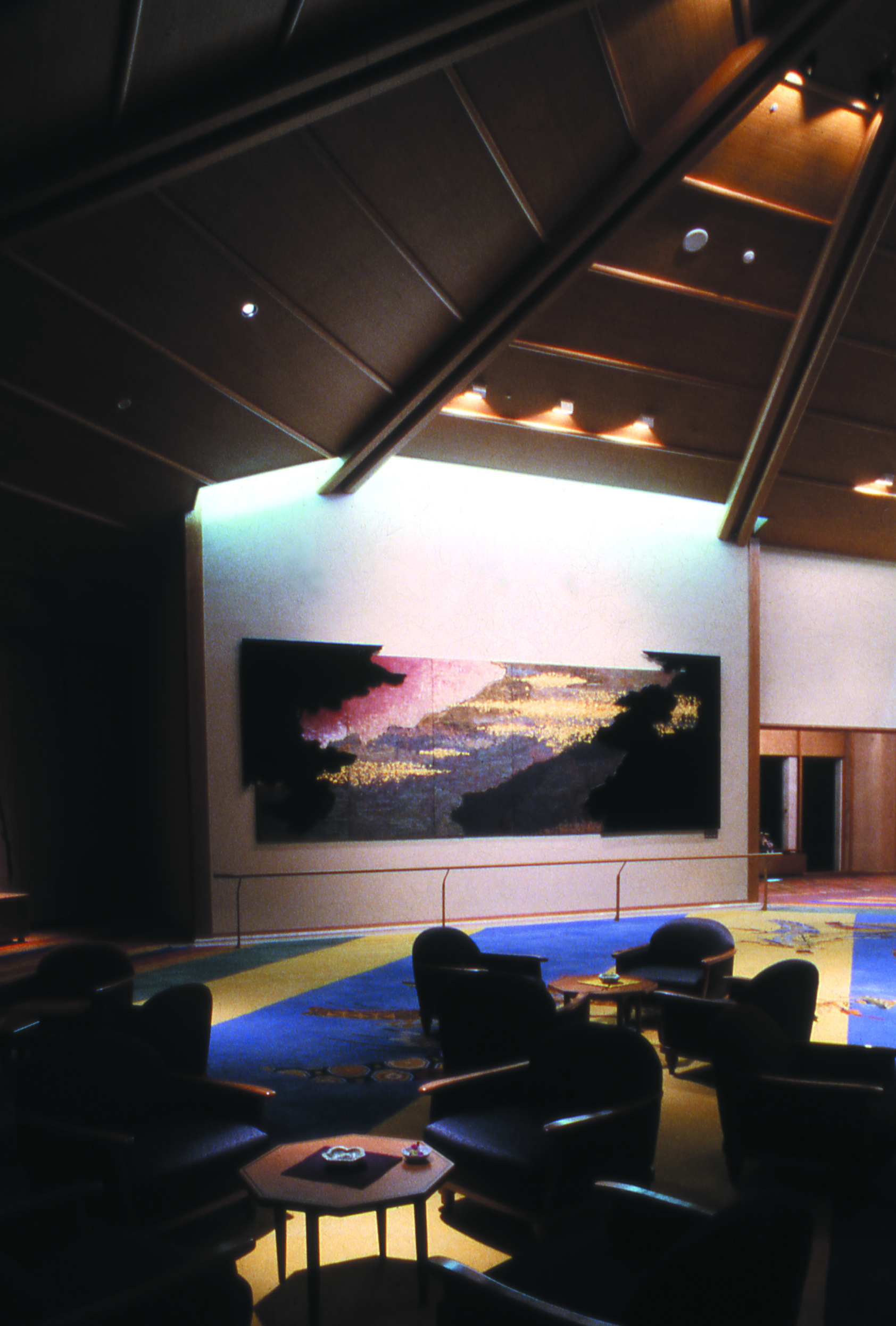
A major reason for my deep respect towards artists of the same generation as Ms Jakucho Setouchi is that they dedicated their lives to upholding and expressing their conviction against war. The resolute will of these predecessors who endured harsh times guides my creative endeavours and forms the root of the wish embodied in this "AMATERASU". This work was installed in the tranquil space at the rear of the front lobby of the former Hyakumangoku Umebachitei in Yamashiro Onsen. It was not created for a specific commission; rather, it is a piece where I, as an artist, gave form to my inner feelings, and through serendipity, it found its place here. There, it realised a collaboration with the lighting piece 'Akari' by the world-renowned sculptor Isamu Noguchi. The architect responsible for the spatial design selected Noguchi's 'Akari' to complement my work. What delighted and honoured me most was how deeply they understood the prayer for peace and the creative intent within my piece, harmonising the form of lacquer with the soft light.
Reflecting on it, my own artistic origins lie there too. Though I graduated from Tokyo University of the Arts, my graduation project was also strongly inspired by Isamu Noguchi, leading me to choose an expression combining lacquer and 'stone'. Time has passed, and I feel profound emotion at being able to collaborate with his spirit once more in this way. The radiance of 'AMATERASU' floating within the jet-black lacquer, harmonising with the 'akari' illuminating the feet. I hope that space delivered a quiet prayer for peace to the hearts of those who visited.
The season of graduation exhibitions brings to mind Isamu Noguchi and his connection with stone
2026-02-11T13:30
It is currently the season for art university graduation exhibitions.
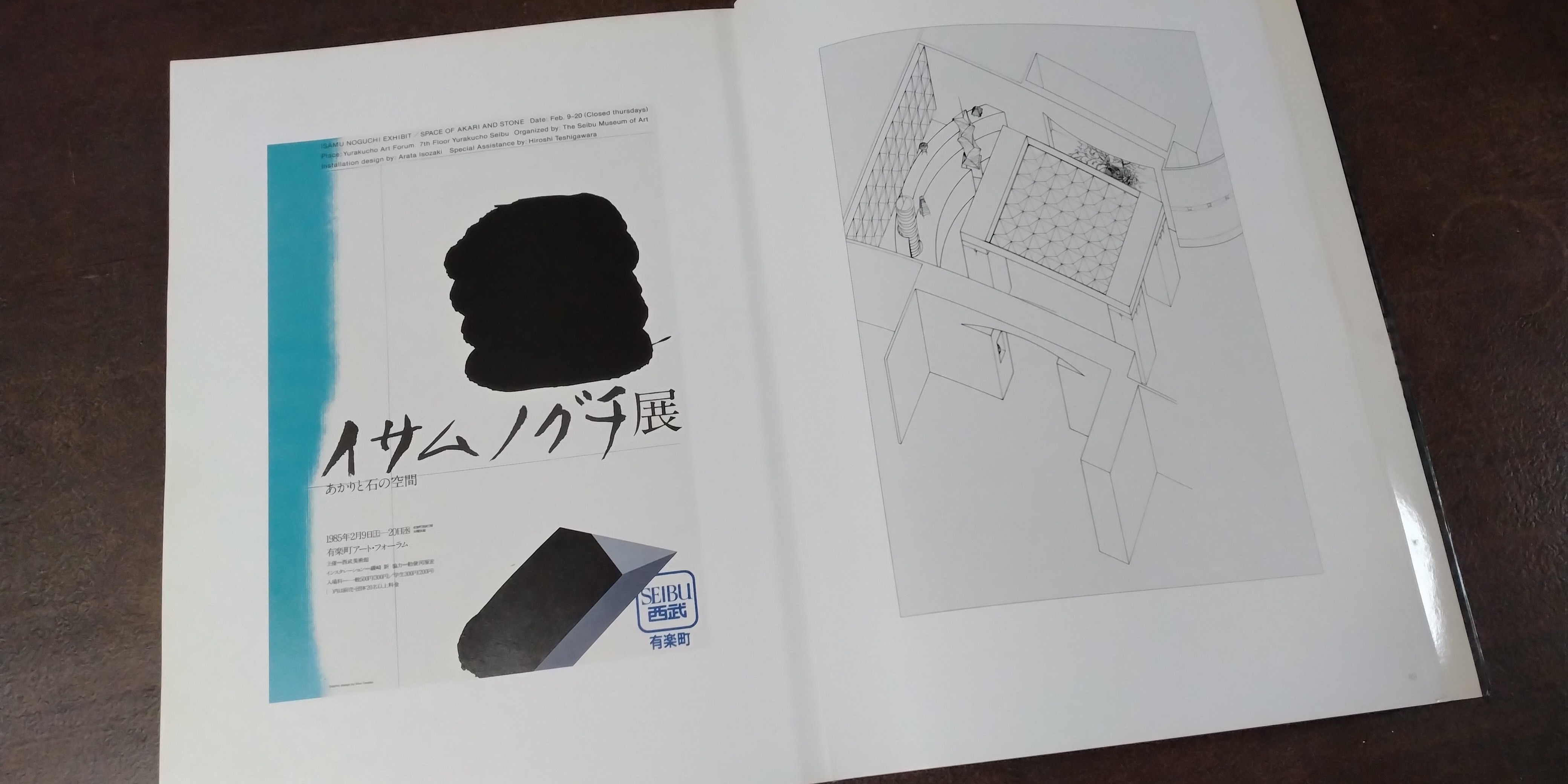
This occurred just before my graduation work was to be displayed at the Tokyo Metropolitan Art Museum. Having visited the 'Isamu Noguchi Exhibition: Light and Stone' in Yurakucho, I was profoundly struck by the overwhelming spatial design created by light and stone – something entirely different from any art exhibition I had experienced before.
Still reeling from that experience, I became convinced that "stone alone must form the foundation of my work." Yet the exhibition was imminent. It was a sudden impulse, but I consulted my lacquer department teacher, knowing it was a tall order. He managed to arrange for some splendid stone from the sculpture department. The fact that my thanks at the time amounted to two sake "Kenbishi " is now a fond, quintessentially Geidai memory.
Only recently did I learn that the architect responsible for that venue's design was Arata Isozaki.
When I lived in Ōita, I often visited the Ōita Prefectural Library (now Art Plaza), designed by him. It feels strangely connected.
My graduation project was completed through the spirit of Mr Noguchi, the spatial vision of Mr Isozaki, and the support of my teachers from both the Lacquer and Sculpture departments. You can view
the work from that time here.
Lacquerware in the Film Princess Mononoke
2026-03-01T13:30
This time, I shall discuss the connection between a famous animated film and lacquer.
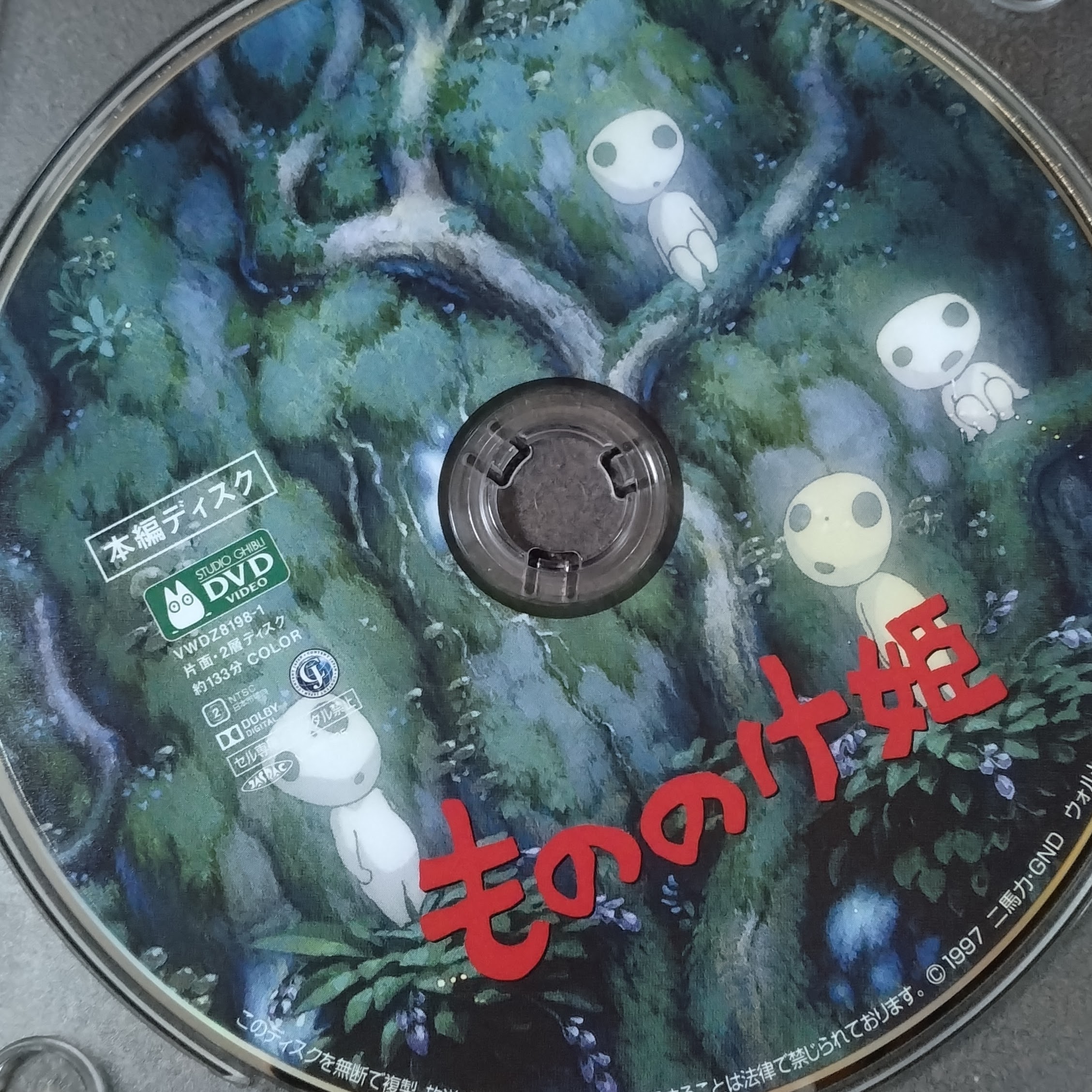
Recently, I watched the DVD of Princess Mononoke. The film depicts how humans should live alongside nature.
In the film, pay attention to the scenes in the protagonist Ashitaka's homeland. In Ashitaka's village, lacquer is applied to buildings and large pots. On the other hand, let us observe the dining scene at another location called the Tatara site. People were eating from bowls made of plain wood, uncoated with lacquer. This difference in depiction is quite intriguing. From this, we can understand that Ashitaka's homeland, the Tōhoku region, was a “village of lacquer”.
In Iwate Prefecture, where the Ezo wars took place, there is a place called Ninohe City. Even today, Ninohe City has many lacquer trees grow. It is a representative production area for the domestic lacquer I use. The artisans who make their living from lacquer tree sap also face many challenges. Cultivating the trees, harvesting the sap, and reviving the forest. Even from the film's detailed depictions, the history and culture of Japanese lacquer come through. Next time you watch the film, do pay attention to the Japanese lacquer there too.
The Ultimate Precision Born from Resilience: The Dry Lacquer Cylindrical Bowl
2026-04-02T14:30
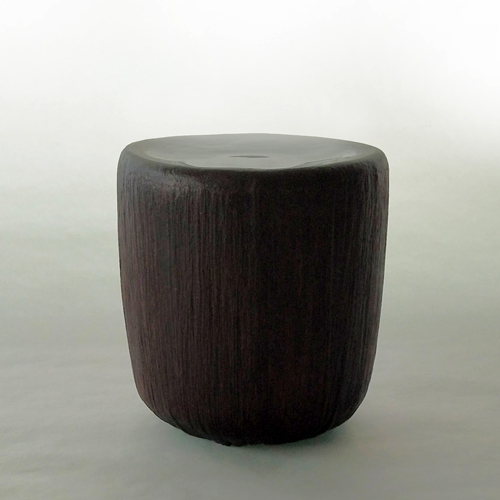
I would like to introduce a piece that captured the attention of many visitors at last year’s exhibition at Takashimaya. It is a cylindrical bowl crafted using the "Kanshitsu" (dry lacquer) technique.
This particular work is etched with a certain frustration that remains an unforgettable turning point in my career as an artist.
A Turning Point: The Cancelled Commission
This project began when I was told, "I would like to purchase this bowl if you could add a lid to it." When using the same meticulous technique as the bowl itself, a one-year production period for a lid is actually quite short.
Nevertheless, I prioritized this request and accelerated my work to meet the expectation.
However, when I finally presented the completed piece, the order was cancelled. The frustration I felt at that moment was beyond words.
However, that experience ignited a fire within me. I decided then that I would no longer create "a lid for someone else," but instead craft the "ultimate lid"—one that I could be truly satisfied with. From that point, I spent several more years in a cycle of trial and error. My bold motivation was simple: "I want to achieve a precision that surpasses even that of Living National Treasures." The source of that ambition lies in the setback I tasted that day.
9,000 Years of History and Modern Determination
The lacquer used in this piece has a unique significance.
The sap is harvested from traditional lacquer trees in the region that served as the model for the Emishi village in the film "Princess Mononoke."
This precious resin, carrying the ancient life force of the forest, reveals a deep and translucent beauty as each layer is applied. Guided by the inherent power of the material, I painstakingly repeated the delicate work.
It has been approximately 9,000 years since humans first began using lacquer. By employing these ancient materials and techniques over several years, I finally achieved a "seamless fit" (Aiguchi) where the joint is invisible to the naked eye. When visitors at the gallery remarked, "I cannot even tell where the lid meets the bowl," that old frustration finally transformed into true confidence as an artist.
The Integrity of Silence
I entered the world of lacquer from a background completely unrelated to the craft. Since graduating from Tokyo University of the Arts and establishing myself as a lacquer artist, I have made it a point not to disclose my specific production processes.
I believe that if an artist wishes to take on such a challenge, they should discover the way through their own thought and effort. I felt a deep sense of empathy and encouragement when I saw a television program mentioning that Shohei Ohtani of the Dodgers does not easily share his training secrets with his peers.
I choose not to explain the process. No matter the hardships endured during its creation, the finished work simply exists in silence and beauty. That is my pride as a lacquer artist. The finished piece speaks for itself. I hope you can feel the intersection where 9,000 years of tradition meet the unwavering determination of a modern artist.
The Japanese Constitution
2026-05-01T10:30
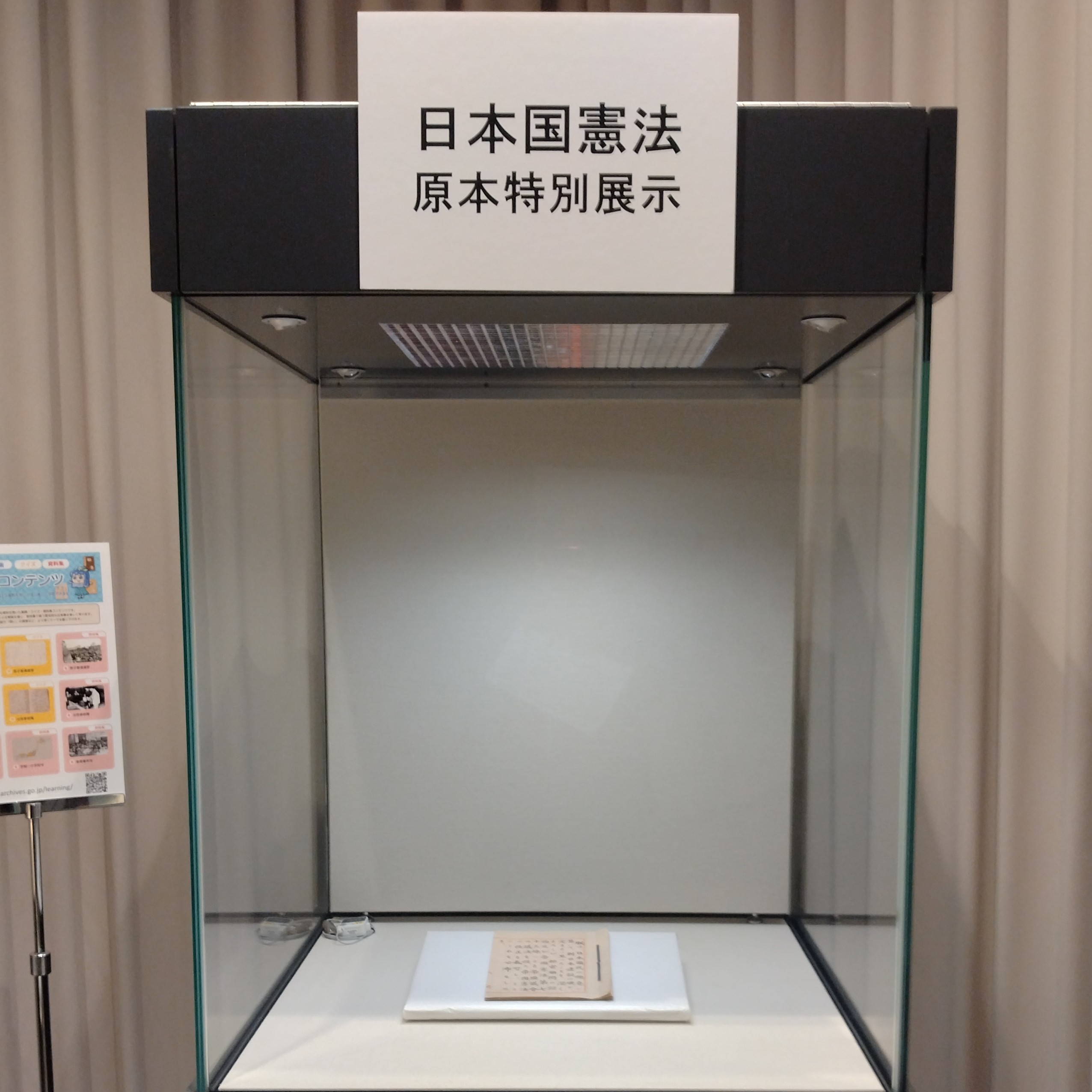
The weight beyond words that the ‘original’ exudes
To mark Constitution Day (3 May), a special exhibition of the original ‘Constitution of Japan’ is currently being held at the National Archives of Japan. For a limited period from 29 April to 6 May, this is a rare opportunity to view this ‘original’ historical document—which is not usually on public display—up close.
I went to see it for myself yesterday.
Seeing the ‘original’ rather than a copy
Standing before the original, quietly enshrined in its display case, the first thing I felt was an overwhelming presence that was fundamentally different from that of a ‘copy’. What lies there is not merely a record of information. It is the texture of the paper, the way the ink has settled, and the resolve seemingly imbued in every single character – things that the people of that era must have faced.
I feel this is somehow deeply connected to the sensation one experiences when appreciating a work of art.
When faced with a fine work of art, we are not merely looking at a ‘form’; we intuitively sense the artist’s breath lying beneath it, and the accumulation of time spent grappling with the materials. It is a kind of ‘aura’ possessed only by the genuine article that speaks to the viewer’s heart across the ages.
The ‘ardour’ of the creative process
Furthermore, as I gazed at the original manuscript, I felt acutely the ‘ardour’ of the creative process—the immense trial and error that must have gone into compiling these vast volumes of text and bringing them to fruition as a single, complete work.
The power of an ‘authentic’ artefact born at a turning point in history.
Why not come and see it for yourselves during this long holiday weekend?
[Special Exhibition of the Original Japanese Constitution]
Venue: National Archives of Japan (Takebashi, Tokyo) Dates: Wednesday 29 April 2026 (public holiday) – Wednesday 6 May 2026 (public holiday) Exhibits: The original document created upon its promulgation on 3 November 1946
It promises to be a quiet yet profound experience, allowing you to touch upon the ‘origins’ of both history and creativity.
Lacquer Wall Panel ‘Genji’
2026-06-16T22:00
Lacquer Wall Panel ‘Genji’—Transcending Time, Forging Bonds
On this occasion, I would like to introduce a work that represents my origins as a lacquer artist and has brought me many meaningful connections. It is the lacquer wall panel ‘Genji’, installed at the entrance to the convention hall of Hotel Senkei in Tsukioka Onsen, Niigata Prefecture. I created this piece in 1987 as my graduation project for the Department of Lacquer Art at the Tokyo University of the Arts.
The Contrast of the Two ‘Genji’
I have infused this work with my own perspective on history and aesthetic sensibility. The splendid world of gold and silver spreading across the centre of the panel represents the world of Hikaru Genji from *The Tale of Genji*, a symbol of courtly culture, whilst the profound black world flanking either side evokes the samurai society of the ‘Genji’ clan that established the Kamakura shogunate. I sought to express the transition from the glittering Heian era to the dawn of the military government through the contrast between the black of the lacquer and the gold and silver.
Memories of Reunion and Gratitude
In fact, this work went missing for a time, and I went through a very difficult period. However, the former proprietress of Hotel Senkei was a very warm-hearted person; she skilfully resolved the difficult situation, and the work was successfully installed in its current location. In particular, when installing this piece, they showed immense consideration by even altering the design of the convention hall entrance to accommodate it. I am deeply grateful that the work is displayed in this location, where so many travellers and guests pass through, and I am reminded of the former proprietress’s profound kindness and thoughtfulness from that time.
The Mystery of Fate
When I was creating this piece, I never dreamt that I would meet Jakucho Setouchi later in life. A single work transcends time and place, forging unexpected encounters and bonds. I feel a sense of such a mysterious twist of fate.
Should you visit Tsukioka Onsen, I would be delighted if you could stand before this lacquer wall Panel, ‘Genji’, and appreciate the contrast between the two eras. Hotel Senkei Official Website
‘Arasowan’ (Let There Be No Strife)
2026-07-04T20:00
The Prayers Imbued in Lacquer—The Concept of ‘Arasowan’
When I first began studying lacquer at university, I saw it as a natural coating that was gentle on the human body and imbued with cultural significance, as seen in maki-e and Buddhist ritual implements. However, as my studies progressed, I learnt of its history—how lacquer had once been repurposed for military use, serving as an adhesive for arrowheads and even as a coating inside artillery shells—and I began to harbour complex feelings towards this material, viewing it as something ‘unpleasant’.
The Shadow of History I Discovered in Jōbōji
Whilst living in Jōbōji, Iwate Prefecture, I learnt that during the war, the military had bought up all the raw lacquer. Furthermore, When I looked into the places of origin and registered addresses of the defendants indicted at the International Military Tribunal for the Far East (the Tokyo Trials), I was deeply shocked to find that many of them were from Fukuoka, Kumamoto, Oita, Iwate and Saitama Prefectures—places where I had once lived.
The Birth of ‘Arasowan’
After moving to Saitama, I learnt of the problem facing Hita City in Oita Prefecture, where the line of hemp craftspeople was dying out. Whilst researching the Agency for Cultural Affairs’ website on ‘Selected Preservation Techniques Supporting Traditional Craft Skills’, I came across the term ‘araso’ (coarse hemp). Inspired by the sound of this word, I conceived the concept of ‘Arasowan’ (Let There Be No Strife).
The Aspirations Embodied in Two Materials: Lacquer and Hemp
The bowls created based on this concept incorporate two key materials.
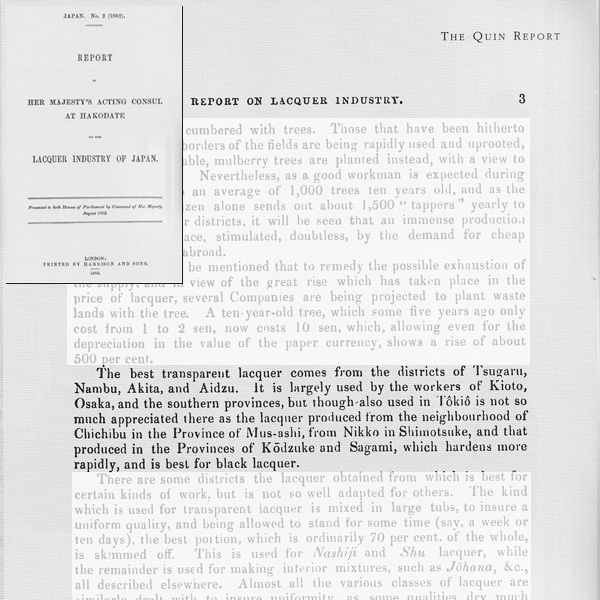
The first is lacquer from the southern region (present-day Jōbōji in Iwate Prefecture), which is recorded in the ‘Queen’s Report’ of the Royal Botanic Gardens, Kew—a World Heritage Site—as a premier source of sap. The second is ‘asō’ (hemp) from Ōita Prefecture, which has been designated as a ‘Selected Preservation Techniques Supporting Traditional Craft Skills’ by the Agency for Cultural Affairs.
By crafting these bowls using these two materials, I sought to give tangible form to my own convictions: to reject war and to support the ideals of Article 9 of the Constitution of Japan.
The Day I Sent Urushi Saplings to the Royal Botanic Gardens, Kew
2026-08-01T11:00
Around 2002, there was a great deal of excitement following the discovery of the world's oldest lacquerware artifacts at the site in Hokkaido.
At the time, the Royal Botanic Gardens, Kew—a UNESCO World Heritage site in the UK—maintained a collection of lacquer trees originating from China. However, I explained to the curator that the lacquer trees native to northern Tohoku were a distinct variety, and I decided to send actual saplings from joboji to them.
International transport of plants was exceedingly strict. Most shipments back then ended up stranded at the airport, and Yamato Transport (UPS Yamato) was practically the only service capable of handling it reliably. Whenever I look at the export permit and shipping slips from those days, the intense tension of running around to manage quarantine and customs procedures comes rushing back.
Those joboji saplings crossed the ocean and journeyed to Kew in England.
It remains an unforgettable memory, knowing that Japan's lacquer history and its unique trees contributed a meaningful stepping stone to global research and collections.
The Day a Giant Lacquer Tree Arrived in the Town of Lacquer—Memories of 1995
2026-09-24T22:00
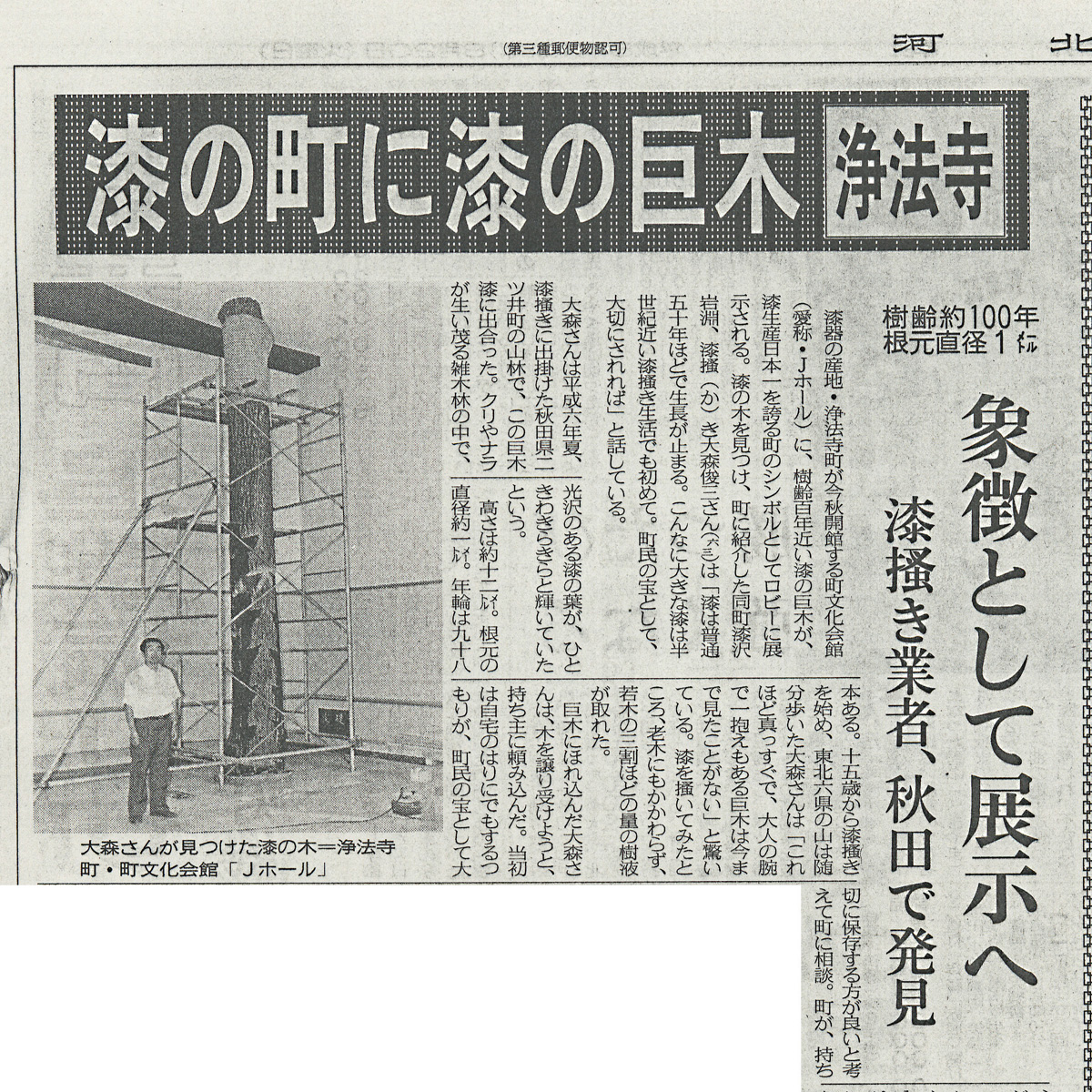
This is an article from the Iwate Nippo about an urushi tree found in Futatsui, Akita Prefecture, when it was installed in the Joboji Town Cultural Hall (J Hall) in Iwate Prefecture in 1995.
That year was also an important time when full-scale production and preparations for the film Princess Mononoke were underway. Akita Prefecture is said to be the model for Ashitaka's village. The beautiful vermilion color of elegant lacquerware was likely extracted from trees of this variety. However, different varieties of trees are mainstream today.
When germination rate, growth rate, amount of sap, and efficiency are prioritized above all else, and such traits are praised as superior varieties, I feel a frustrating sense of incongruity, as if it echoes past eugenic ideologies.
The original trees of this kind possess a calm, refined luster and offer excellent coloration in vermilion. When I reflect on what is lost in the shadow of efficiency, the theme of "coexistence between nature and humans" portrayed in the film continues to question us deeply today.
Reflecting on the Future of Urushi Country, from Behind Katsura-shimizu
2026-10-07T09:48
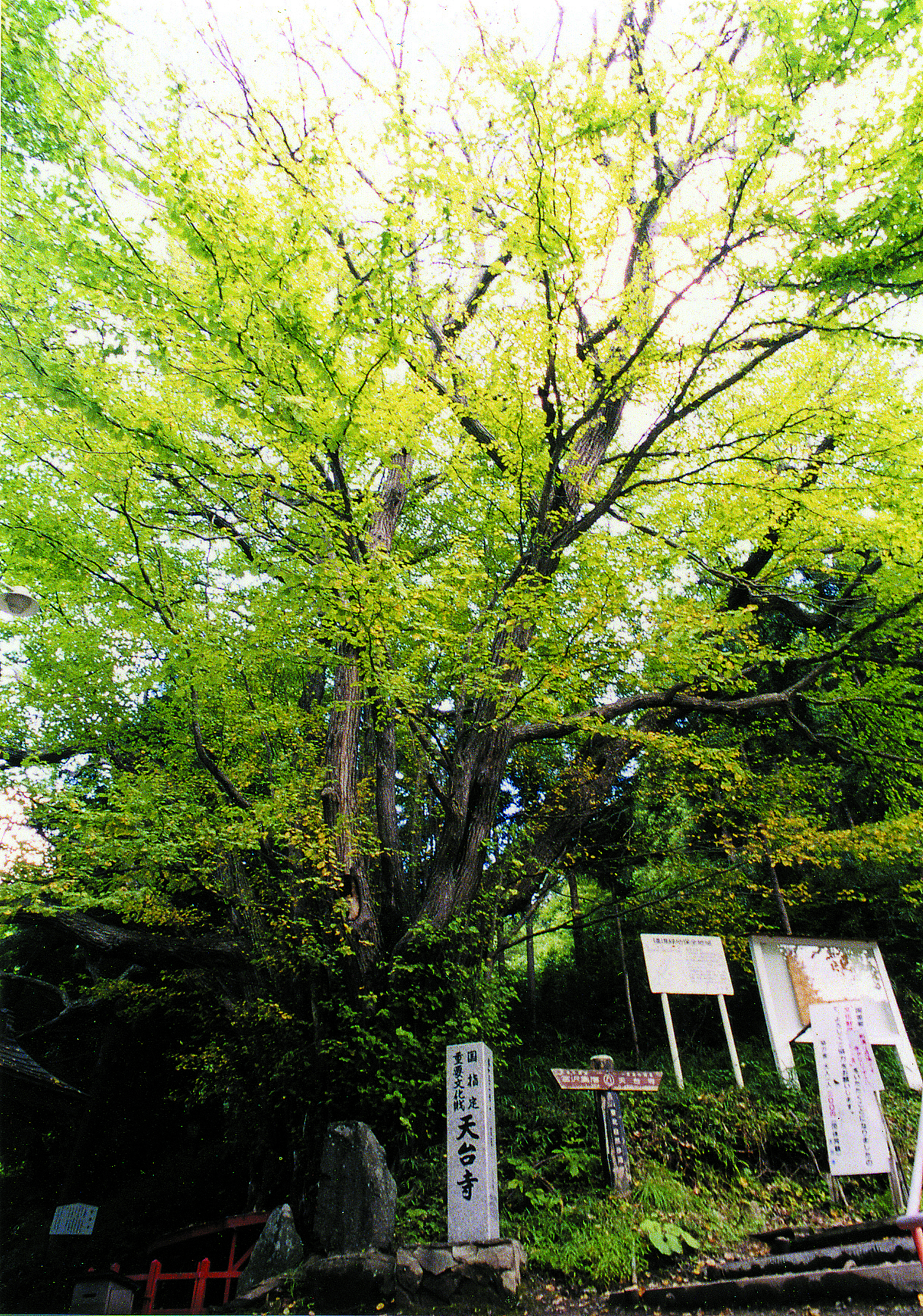
The giant lacquer tree installed at the Joboji Town Cultural Hall (J Hall)—the lacquer tapper who harvested sap from that very tree has, on his own initiative, created a traditional lacquer tree plantation behind Katsura-shimizu, at the foot of Tendaiji Temple.
However, because this is an individual effort, sustaining it is far from easy. Lacquer trees must be protected and nurtured for decades, even a hundred years, without being cut down. Such an undertaking, which looks to the very long term, is difficult to get across to politicians, who tend to demand efficiency and results above all else.
Even so, as the Quinn Report also records, magnificent lacquer trees 100 or even 200 years old once actually stood in what was then northern Tohoku.
The katsura tree at Katsura-shimizu, shown in the photo, like the cedar trees of Tendaiji, once survived the ordeal of being felled and has carried its life forward to the present. I quietly cherish the hope that someday this place will become one we can be proud of, one that is unmistakably a true "Urushi no Sato," a village of lacquer.